
If your boiler keeps losing pressure, it can be worrying and inconvenient, especially if you are left without heating or hot water. The good news is that some causes are simple to check, but it is important to know where safe DIY ends and a qualified engineer should take over.
What normal boiler pressure usually looks like
Most modern combi and system boilers run at around 1.0 to 1.5 bar when the system is cold. As the heating warms up, it is common for the pressure to rise slightly, often up to around 2.0 bar.
Every boiler is different, so always check your manufacturer manual for the recommended cold and hot pressure ranges for your specific model. If you are unsure, a Gas Safe registered engineer can confirm what is normal for your system.
Typical reasons a boiler loses pressure
Low pressure is nearly always a sign that water is being lost from the system or that a key component is not working correctly. Understanding the common causes can help you explain the issue clearly when you speak to an engineer.
Recent radiator bleeding letting air out also releases a little pressure and water from the system
Small leaks from radiator valves, towel rails, or pipe joints that slowly drop the pressure
PRV (pressure relief valve) discharge where excess pressure has been released through a safety pipe
Expansion vessel problems which stop the system managing pressure changes properly
Hard water and limescale causing wear to internal parts in areas like New Milton, Christchurch and Lymington
Even tiny drips can cause a noticeable pressure drop over time. If you are topping up the pressure more than a few times a year, it usually points to an underlying fault that needs proper investigation.
Safety-first: when to stop and call an engineer immediately
Before you try any checks, it is important to recognise situations where you should stop now and call for help. Safety comes before getting the heating back on. If any of the following apply, turn the boiler off, call a Gas Safe engineer straight away, or contact the gas emergency helpline:
You smell gas anywhere in the property
Your carbon monoxide alarm is sounding or showing a warning
You see water leaking near electrical components, sockets or the boiler controls
The boiler is making loud banging or knocking noises along with pressure changes
Do not attempt to open the boiler casing or adjust internal components yourself. Gas appliances must only be worked on by correctly qualified engineers.
Step-by-step checks you can safely do at home
There are a few simple, visual checks that most homeowners can carry out safely without tools. If at any point you are unsure, stop and arrange a boiler diagnostic visit.
1. Look at the pressure gauge
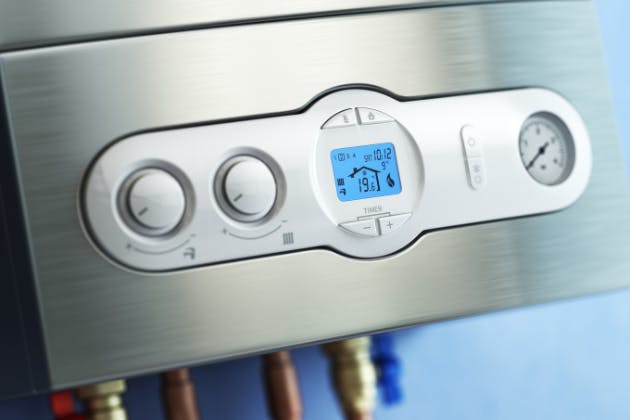
Start by checking the pressure gauge on the front of the boiler or on the pipework nearby. On most boilers, it is a small circular dial marked in bar, although some models use a digital display.
If the pressure is sitting close to zero or below the recommended range in your manual, the boiler may lock out to protect itself. Make a note of the reading when the system is cold, and again after the heating has been on for 15 to 20 minutes.
2. Inspect radiators and visible pipework
Walk around your home and carefully look at radiators, towel rails and any exposed pipework. Focus on valves, joints and the bottoms of radiators, where leaks are most common.
You are looking for damp patches, green or white crusty marks, staining on walls or floors, or any sign of water on the pipework. Even a slow, occasional drip can gradually lower the pressure.
3. Check around the boiler and outside PRV pipe
Next, look under and around the boiler for any signs of water. Some boilers have a small plastic or metal discharge pipe underneath that can drip if the system has over-pressurised in the past.
Outside, find the copper pressure relief valve (PRV) pipe, usually pointing towards the ground near where the boiler is installed. If it is wet, stained, or slowly dripping, it may mean the PRV has been releasing water and an engineer needs to investigate the cause.
4. Make sure the filling loop is fully closed
If you or someone else has recently topped up the pressure, check that the filling loop valves are fully closed. The filling loop is typically a small flexible silver hose with one or two black or blue taps.
Both taps should be set in the closed position when you are not topping the system up. If one has been accidentally left slightly open, the pressure can rise too high then drop again through the PRV, leading to ongoing pressure problems.
What you should leave to a qualified engineer
While visual checks are usually fine, anything involving tools, gas components or the inside of the boiler casing must be left to a professional. This includes diagnosing issues with the expansion vessel, PRV replacement, internal leaks or controls faults.
In hard water areas, limescale can build up inside the boiler and on key components such as the plate heat exchanger. This can put extra strain on parts, contribute to pressure problems and shorten the life of the appliance if it is not picked up during regular servicing.
A Gas Safe registered engineer can carry out pressure tests, isolate sections of pipework, check the expansion vessel charge and assess whether any parts are starting to fail. They will also confirm that your boiler is operating safely and efficiently.
How regular servicing helps prevent pressure problems
An annual boiler service is one of the best ways to catch pressure issues early, especially in places like New Milton, Christchurch and Lymington where hard water is common. Small leaks, worn seals and tired valves are much cheaper to put right before they cause regular breakdowns.
During a proper service, your engineer will check operating pressures, safety devices, ventilation and flues, and advise on any parts that are starting to show their age. They can also give you practical tips on topping up pressure correctly and what readings to look out for on your particular boiler.
Need help with a boiler losing pressure in New Milton, Christchurch or Lymington?
If your boiler keeps losing pressure, or you are unsure whether it is safe to reset or top it up again, it is time to get it checked professionally. Do not ignore a system that needs regular topping up, as it can lead to bigger faults and higher repair costs later.
For expert boiler repairs, or thorough boiler servicing, A Armstrong Plumbing & Heating can help. Call 07904590952 to book a diagnostic visit and get your heating system back to reliable, efficient operation.