Learn how a magnetic boiler filter protects your heating system and when it may be a sensible addition to an older or troublesome installation.
Blog
Magnetic Boiler Filter: What It Does and When You Need One
A Armstrong Plumbing & Heating

A magnetic boiler filter helps protect a central heating system by catching ferrous debris and magnetite as the heating water circulates. Fitted correctly and cleaned regularly, it can reduce the build-up that contributes to noisy circulation, worn components and returning radiator cold spots.
What a magnetic boiler filter does
As radiators, pipes and other steel components age, small particles of iron oxide can break away and circulate through the system. This dark material is often called magnetite or black sludge. It can collect in radiators, pumps, valves and the boiler’s heat exchanger, restricting water flow over time.
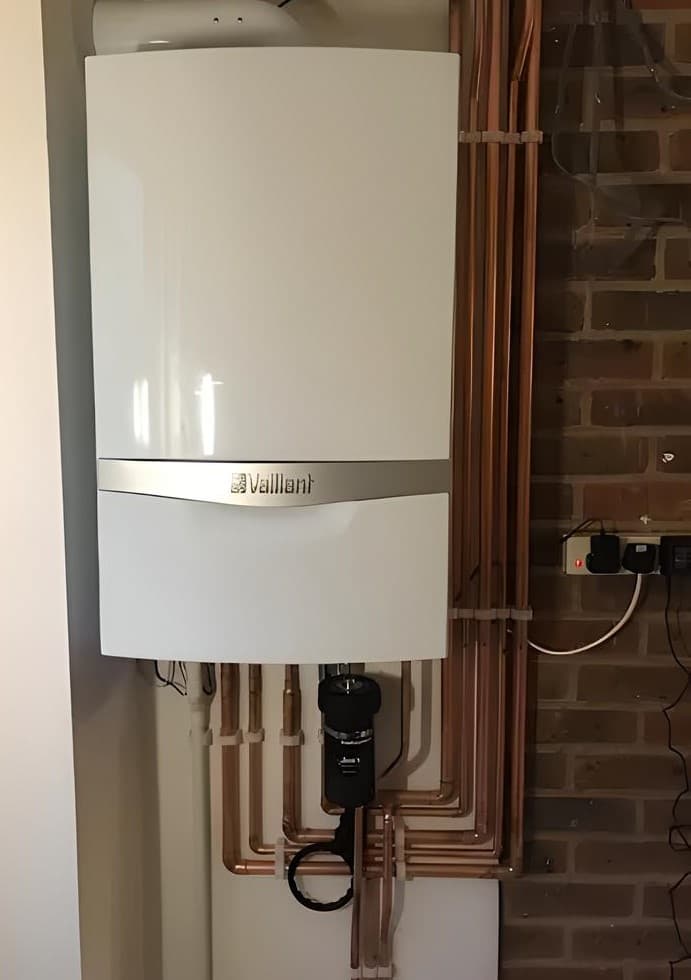
A magnetic filter is installed in the heating circuit so water passes through it before returning to the boiler. Inside the filter, a strong magnet attracts ferrous particles, while the filter body allows the cleaner water to continue circulating. It will not remove every type of contaminant, but it is particularly effective against the metal debris that causes many central heating problems.
Where it is fitted and what it protects
On a typical sealed central heating system, the filter is fitted on the return pipe close to the boiler. This position allows it to capture debris before it reaches sensitive and expensive components such as the pump, diverter valve or heat exchanger. The exact arrangement depends on the boiler, pipework and available space, so installation should be carried out by a qualified heating engineer.
By reducing the amount of magnetite moving through the system, a filter may help limit pump and valve wear. It can also support better water flow, which may reduce kettling or other boiler noises associated with restricted circulation. It is not a cure for every fault, but it can form part of a sensible protection plan.
Signs your heating system may benefit
A magnetic filter is often worth discussing if the same issues keep returning after basic maintenance. The following signs can point to poor water quality or debris circulating through the system:
Black or very dark water appears repeatedly when radiators are bled.
Thermostatic radiator valves stick or fail to regulate room temperature properly.
The boiler becomes noisy when heating is running, particularly where flow appears restricted.
Radiators need frequent balancing or some rooms repeatedly heat more slowly than others.
Cold spots return after bleeding, cleaning or previous heating repairs.
These symptoms can have other causes, including trapped air, a failing pump, incorrect system pressure or a faulty valve. An inspection is therefore more useful than fitting a filter based on symptoms alone.
Filter vs power flush vs inhibitor
A magnetic filter is mainly a protective device. It catches new debris as it circulates, making it useful for an existing system that is reasonably clean and for a replacement boiler installation that needs ongoing protection.
A power flush is a cleaning process rather than a permanent filter. It uses specialist equipment and cleaning chemicals to remove significant sludge and deposits from radiators and pipework. It may be appropriate when circulation is badly restricted, several radiators have persistent cold spots, or an older system contains a substantial amount of contamination.
An inhibitor is a chemical treatment added to the system water to help slow corrosion and reduce further sludge formation. It does not replace a physical filter and it cannot reliably remove heavy existing deposits. Depending on the system’s condition, an engineer may recommend an inhibitor, a magnetic filter, a power flush or a combination of these measures.
Older heating systems need particular care because cleaning can release debris that has been settled in pipework for years. An assessment helps determine whether the system can be cleaned safely, whether components may need attention first and how best to protect a newer boiler connected to older radiators.
Cleaning and ongoing maintenance
A magnetic filter is not a fit-and-forget device. The collected debris should be removed during boiler servicing or a planned heating inspection, with the system checked for leaks, pressure changes and correct operation afterwards. How often it needs cleaning depends on the age, size and condition of the system.
Ask your engineer where the filter is fitted, how much debris it has collected and whether the system water needs testing. It is also sensible to ask whether the radiators need balancing, whether inhibitor levels are suitable and whether any circulation problems suggest a deeper blockage.
Arrange a heating system assessment
A magnetic boiler filter can be a practical way to protect a central heating system, but the best results come from matching it to the system’s actual condition. Cleaning, water treatment and repairs may all be needed before the filter can provide effective long-term protection.
To book boiler servicing or a heating inspection, contact A Armstrong Plumbing & Heating on 07904590952. An engineer can assess water quality, investigate recurring faults and explain suitable protection options. You can also arrange boiler servicing or find help with heating repairs.
Other Articles