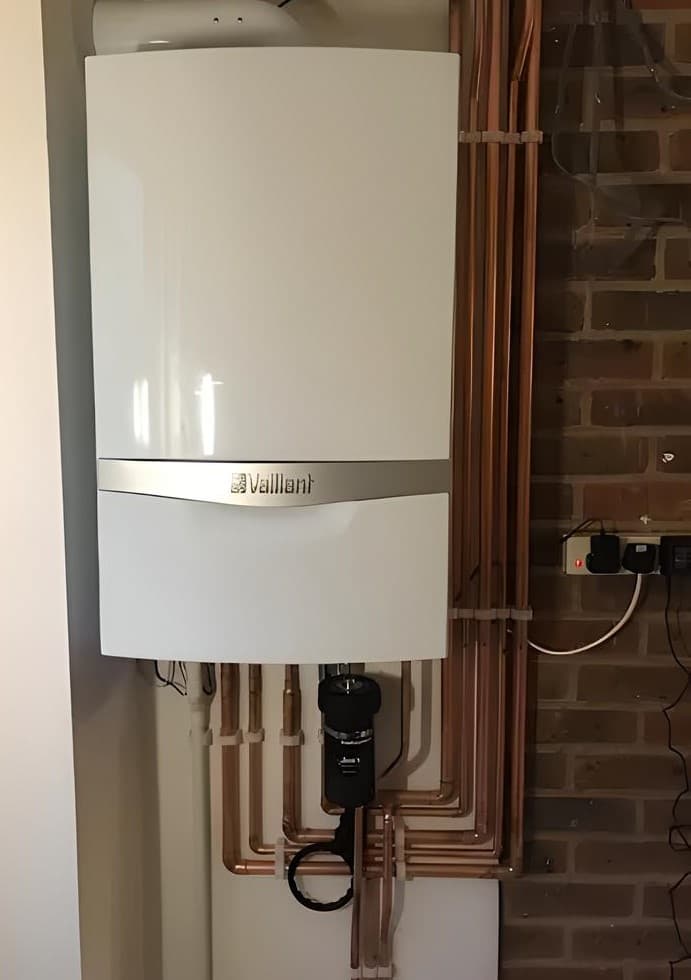
Talk to us about your boiler or heating and we will help you work out the next step.
Blog
Boiler keeps losing pressure? What it means and what to do next
A Armstrong Plumbing & Heating

If your boiler keeps losing pressure, it can be worrying, especially when the heating or hot water start playing up. The good news is that a dropping pressure gauge is usually your system trying to tell you something, and there are clear steps you can take to deal with it safely.
What boiler pressure actually means
Most modern boilers are sealed systems, which means they rely on water pressure to move hot water around your radiators. The pressure is shown on a gauge, often on the front of the boiler.
On many boilers, normal cold pressure is around 1.0 to 1.5 bar. It usually rises a little when the heating is on, often up to around 2.0 bar. Every boiler is different, so check your manual for the right range for your model. If the gauge keeps falling below the green zone, your boiler may lock out to protect itself.
Common reasons a boiler keeps losing pressure
There are several typical causes for a gradual or repeated pressure loss. Some are minor, others point to an issue that needs a Gas Safe engineer.
Small leaks on radiators or valves - tiny weeps on radiator valves, tails or joints can slowly drop pressure over days or weeks.
Pressure relief valve (PRV) discharge - if the system over-pressurises, the PRV can open and release water outside through a copper pipe.
Expansion vessel issues - if the air side loses charge, pressure can swing from very low to very high when the heating runs.
Filling loop left slightly open - a partially open loop can cause incorrect pressure and mask the real fault.
Recent radiator bleeding or trapped air - letting air out without topping up, or air moving around the system, can affect the reading.
Repeated topping up may seem like a quick fix, but it is a sign something is not right. Cold mains water brings in oxygen, which over time can increase corrosion inside your system.
Safe checks you can do before calling an engineer
Always start with your boiler manual and follow the safety guidance. Never open the boiler casing or adjust anything inside it yourself. Gas appliances must only be worked on by a Gas Safe registered engineer.
Stop and get help straight away if:
you smell gas anywhere in the property
your carbon monoxide alarm is sounding or showing a warning
you see water leaking near sockets, electrics or the boiler controls
you see burning or scorch marks around the boiler
Turn the boiler off. If you smell gas or your carbon monoxide alarm goes off, open the windows, get everyone outside and call the National Gas Emergency Service. For anything else on this list, call a Gas Safe registered engineer.
1. Look for signs of leaks around your home
Walk around your property and check all accessible radiators, towel rails and pipes. You are looking for damp patches, staining or green/white crust where water has dried.
Pay special attention to radiator valves, pipe joints and the area directly below them on floors and skirting boards. Even a small occasional drip can slowly drop the pressure.
2. Check under the boiler and the pipe outside
Look under and around the boiler for any water. Then go outside and find the copper pressure relief valve (PRV) pipe. It usually points down towards the ground near where the boiler is fitted.
If that pipe is wet, stained or dripping, the PRV has probably been letting water out because the pressure got too high. An engineer needs to find out why.
3. Check the pressure gauge and boiler status
Make a note of the current pressure reading, whether the system is cold or hot, and whether any warning lights or error codes are showing. Many boilers have a highlighted green band on the gauge that shows the normal range. Take one reading with the system cold, and another after the heating has been on for 15 to 20 minutes.
If the pressure is around 1.0 to 1.5 bar when cold and rises a little with the heating on, that is usually fine. If it is down near zero or shooting above 2.5 to 3 bar, do not ignore it.
4. Make sure the filling loop is fully closed
The filling loop is usually a silver flexible hose under the boiler, with one or two small taps or levers. If you or anyone else has topped up the pressure recently, check both are fully closed.
A loop left slightly open lets the pressure creep too high. The PRV then lets water out and the pressure drops again, which can look like a leak when it is not.
5. Top up with the filling loop, only when appropriate
If the pressure is low and your boiler manual says it is safe to do so, you can usually top up using the filling loop. This is typically a silver flexible hose with one or two small taps or levers.
With the heating off and the system cool, slowly open the loop valves and watch the gauge rise. As soon as it reaches the recommended level in your manual (commonly around 1.2 bar), close both valves firmly. Our guide on how to top up boiler pressure safely goes through it step by step.
Never leave the filling loop valves open, and do not keep topping up every day. If the pressure keeps dropping after you refill, you need an engineer to find the cause rather than masking it.
6. When to stop and call an expert
Some situations mean you should stop any DIY checks and arrange a professional visit as soon as you can.
Pressure drops from normal to near zero in hours, not days.
You are topping up more than once a month or the gauge is constantly swinging high and low.
You see water anywhere near electrics, the boiler casing or the flue.
The boiler is making loud banging or clanging noises.
Error codes keep appearing, especially pressure or pump related ones.
In these cases, continuing to run or refill the system can risk further damage, so it is safer to have a Gas Safe engineer investigate properly.
How a Gas Safe engineer tracks down pressure loss
A professional has the tools and training to find the source of pressure loss without guesswork. They will usually start with a visual inspection and a series of controlled tests.
This may include pressure testing the system to confirm if there is a leak, recharging or replacing the expansion vessel if the air charge has failed, and checking the pressure relief valve to see if it is passing water when it should be sealed.
On more complex systems, they may test individual zones, use leak detection equipment, or isolate sections of pipework. The goal is always to fix the underlying cause so you are not constantly relying on the filling loop.
Here is what one customer said after we tracked down their pressure problem:
"I was having to re-pressurize the boiler every day. Andy isolated the problem by fitting extra valves to eliminate various sections of pipe circuits." (Expert Trades review, December 2019)
How regular servicing helps prevent pressure problems
An annual boiler service is one of the best ways to catch pressure problems early. Small leaks, worn seals and tired valves are much easier to put right before they cause a breakdown.
During a service, the engineer checks the operating pressure, the safety devices and the flue. They can also show you how to top up correctly and what readings to look out for on your boiler.
Simple symptoms log to help your engineer
Keeping a short log of what the pressure is doing can save time at the appointment. It helps your engineer see patterns and may point to certain faults.
You can use a notepad or your phone with entries like:
Example symptoms log template:
Date / time - system hot or cold - pressure reading - any noises, leaks, or error codes
For example: 18 May, 7:30am, cold, 0.4 bar, no error code. 18 May, 8:10am, heating on, 1.8 bar, slight banging in pipes. A couple of days of notes like this can be extremely useful.
Frequently asked questions
Is 0.5 bar too low?
In most cases, yes, 0.5 bar is too low for a modern boiler to run reliably. Many will lock out somewhere between 0.5 and 0.8 bar to protect the system from damage.
If your gauge is showing around 0.5 bar or less when cold, check your manual. If it confirms the pressure is low and it is safe to top up, you can carefully bring it back into the recommended range. If it keeps falling again, stop topping up and call an engineer.
Why does pressure rise when the heating is on?
As water heats up it expands, so it is normal for the pressure to rise a little when the heating is running. The expansion vessel is there to absorb this change.
If the vessel is not working correctly, the pressure can shoot up too high when hot and then drop too low when cold. That kind of big swing is a sign you need a professional to check the vessel and safety components.
Next steps and getting expert help
If your boiler keeps losing pressure, a quick top up may get you warm again, but it should never be the long term answer. Finding and fixing the real cause protects your boiler, reduces the risk of corrosion and helps keep your energy bills under control.
For help with a boiler that keeps losing pressure, A Armstrong Plumbing & Heating can find the cause and put it right. Take a look at our boiler repairs and boiler servicing pages, or get in touch to book a visit. A Gas Safe registered engineer can diagnose the issue safely and keep your heating system running reliably.
Other Articles